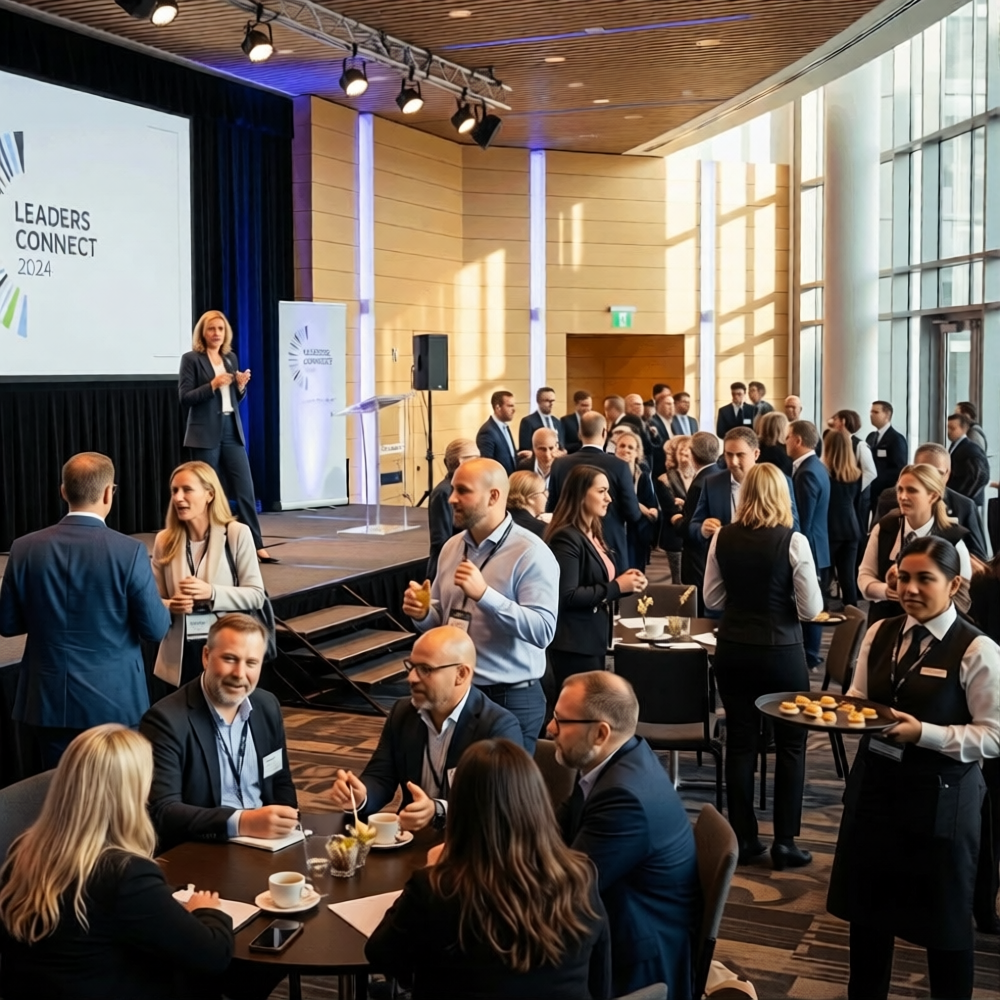
Events are no longer simply dates added to a calendar, venues to be booked, or programs delivered according to a predetermined schedule. At a time when audiences are surrounded by content, advertising, and digital communication around the clock, the real competition is happening somewhere else: How do you make people feel that being at your event was worth their time?
This shift is redefining the role of event management.
Today, the success of a conference is not measured solely by attendance, just as the success of an exhibition is not determined by the number of booths. An event does not succeed simply because the program finished on time. The real value lies in the experience attendees have from the moment they arrive, the interactions they make, and the impression they take with them when they leave.
This is where the role of event management companies is changing — from simply executing details to designing meaningful experiences with a clear purpose.
From Organizing an Event to Designing the Experience
For years, event management has been closely associated with operations: selecting the venue, managing suppliers, preparing the stage, handling registration, coordinating lighting and sound, and managing the schedule.
All of these elements remain essential, but they are no longer enough.
Today's attendees expect a complete experience. They want to understand why they should be there, what they will gain from the experience, how they can interact with others, and what they will take away once the event is over.
That is why thinking about the attendee experience has become an essential part of the planning process from the earliest stages.
At Range Event Management, we view an event as a complete experience rather than a collection of separate services. The process begins by understanding the objective and the audience, then turning that understanding into a cohesive experience that brings together content, venue, design, technology, and human interaction.
Technology Matters, But It Is Not the Experience
Technology has brought significant change to the events industry.
Registration tools have become more advanced, data analytics more precise, and interactive technologies more widely used. Artificial intelligence is also playing an increasingly important role in personalizing experiences and improving operational efficiency.
But no matter how advanced technology becomes, it remains a tool.
An event app can make information easier to access. Artificial intelligence can help analyze attendee data. Screens and modern technologies can add a powerful visual element to an event.
But technology alone cannot create a successful event.
The real difference often comes down to the human details: how guests are welcomed, how easily they can move through the venue, the quality of communication, the timing of each session, the nature of interactions between attendees, and even the feeling the space creates.
That is why we believe the best use of technology is technology that serves the experience rather than overshadows it.
Successful Events Start With the Right Question
Before thinking about the stage, lighting, or supplier list, there is a more important question:
Why are we holding this event?
Is the goal to launch a new product?
Build relationships with clients?
Bring together partners from a specific industry?
Strengthen brand presence?
Share knowledge?
Or create a space that brings the right people together in the right environment?
The answer to that question determines everything that follows.
At Range Event Management, planning starts with understanding the objective rather than selecting operational elements. An event without a clear purpose may look visually impressive, but that does not necessarily make it effective.
Small Details Create the Bigger Picture
Attendees may not remember every session or every part of the program, but they will remember how the experience felt.
Was arrival easy?
Was registration smooth?
Was the venue comfortable?
Was the information clear?
Did they feel that the program had been designed with them in mind?
Were there genuine opportunities to connect?
These details may seem small when considered individually, but together they shape the overall impression of the event and the brand behind it.
That is why professional event management is not only about what the audience sees on stage. It is also about everything happening behind the scenes — much of which may only become noticeable when something does not go as planned.
When the Audience Becomes Part of the Event
One of the biggest shifts taking place in the events industry is the transition from audiences being passive recipients to becoming active participants.
Attendees no longer want to simply sit and listen throughout an event.
They want to interact, ask questions, meet new people, share their ideas, and discover content that is relevant to their interests.
This requires event organizers to look at the experience from the attendee's perspective.
What will make someone stay for a session rather than leave?
What will encourage them to start a conversation with another attendee?
What will make them want to capture a particular moment and share it?
And what will make them talk about the event after it is over?
These questions have become an essential part of modern event design.
Range Event Management: Where Planning Meets Experience
At Range Event Management, we believe our role goes beyond delivering an event according to a checklist.
We work to transform objectives into experiences that people can engage with, connect through, and remember.
From conferences and corporate events to product launches, private gatherings, and brand experiences, the process begins by understanding the needs of the client and the audience, then building every detail around that vision.
Planning, supplier management, production, design, technology, guest experience, and on-site event management are not separate parts of the process for us. They are interconnected elements that need to work together to ensure that everything feels seamless to the people attending.
What Will Define the Future of Events?
As technology and artificial intelligence continue to evolve, many operational tasks are likely to become faster and more efficient.
But this development will not reduce the importance of the human element in events.
If anything, it may make human experiences even more valuable.
The more crowded the digital world becomes, the more important opportunities to bring people together face-to-face become. And as producing content becomes easier, creating an experience that is genuinely worth remembering becomes more challenging.
This is where the future of the events industry lies: not in choosing the newest technology or organizing the biggest possible event, but in creating an experience whose value people understand and that makes them feel it was designed with them in mind.
In the end, an event may last for a single day.
But the impression it leaves can last far longer.
And that is the difference between an event that was simply organized and an experience that was intentionally designed to make an impact.